ServicesBattery Storage
Battery Storage in Centerville
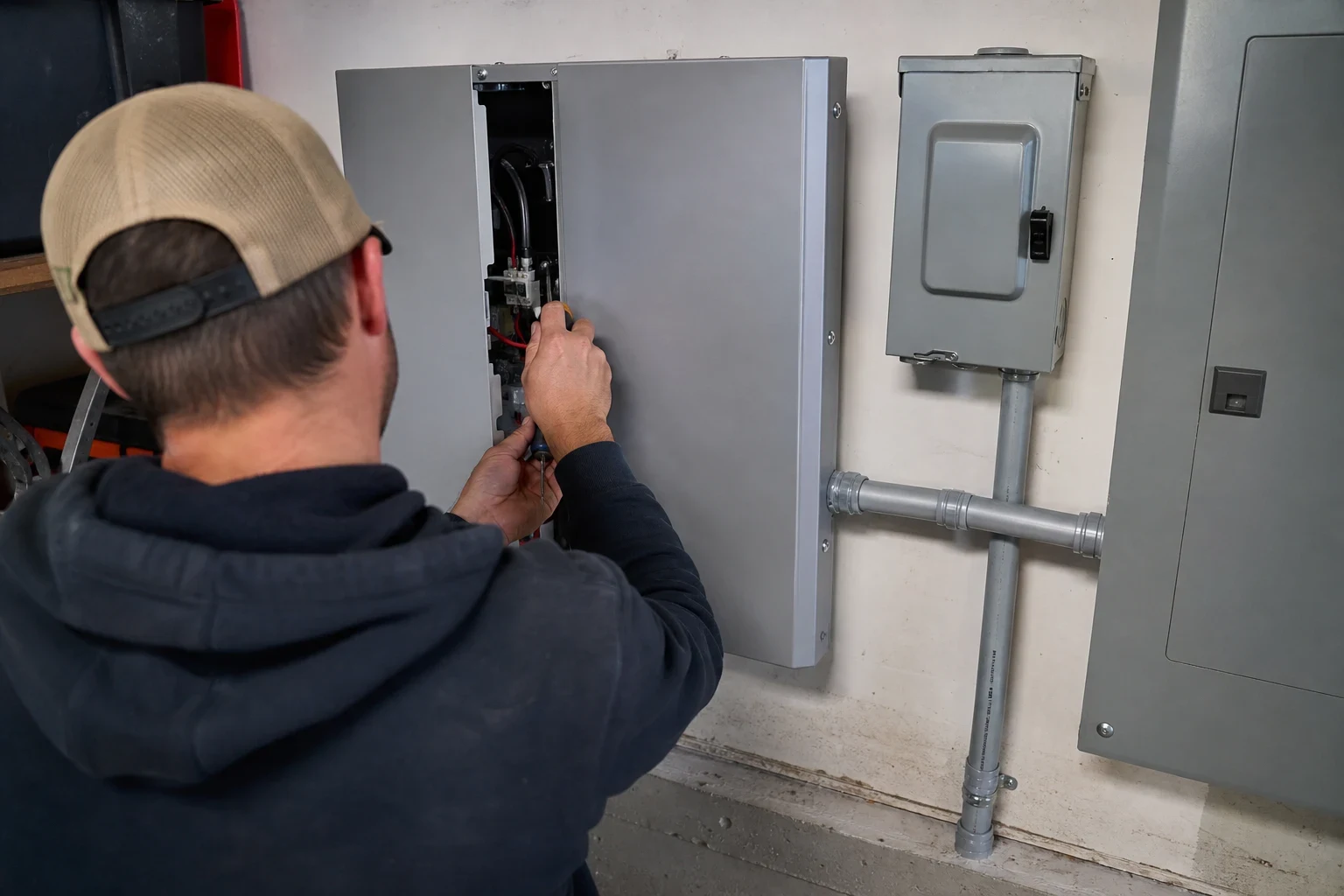
We install home batteries that store your solar power for evening use and keep chosen circuits running when the grid drops. Before anything is ordered, we size the battery to your real loads, so you pay for the backup you need and plan the work on your schedule.
What a home battery does for you
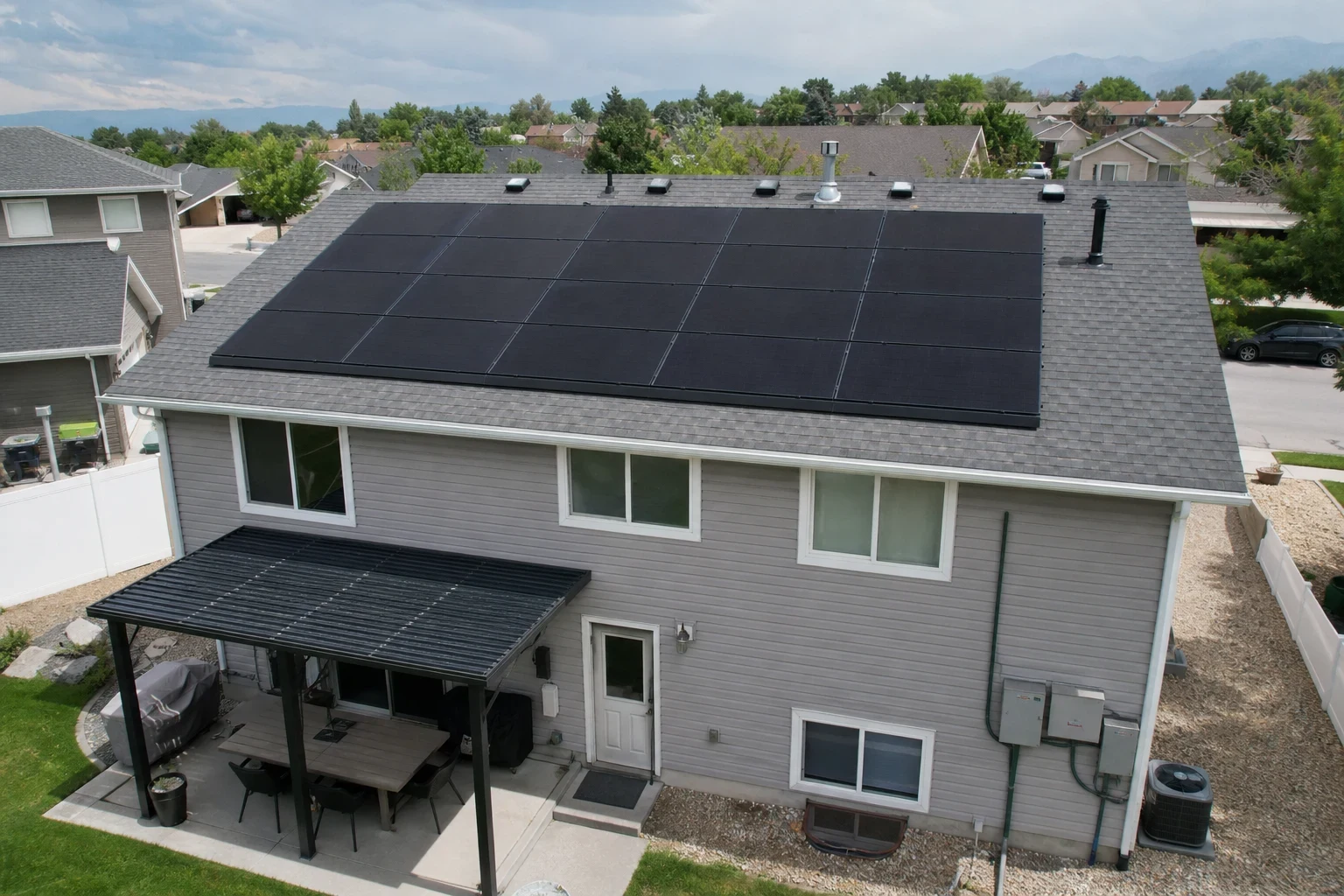
A battery does two jobs. During the day, extra power from your panels charges it instead of flowing straight back to the utility at a low export credit. After sunset, your home draws from the battery first, so more of the solar you produced gets used at full value.
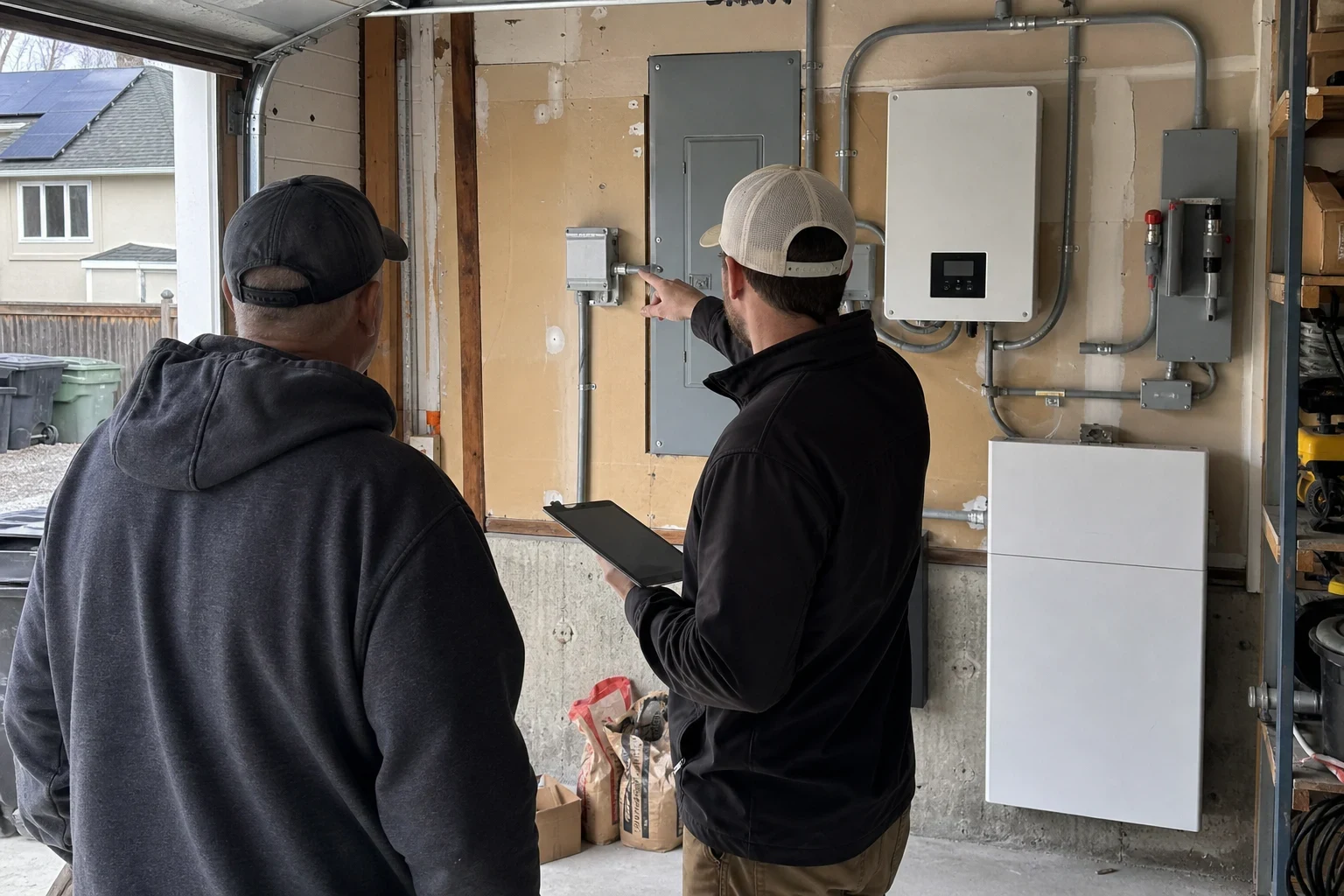
Its second job is backup. When the grid goes down, a backup gateway opens the connection to the utility and the battery feeds your protected circuits within moments. Without that gateway, a standard grid-tied solar system shuts off during an outage by design, even on a sunny afternoon.
The best time to add storage is before you need it. Planning ahead lets us study a year of your usage, pick the right capacity, and schedule the install around permits and inspections instead of rushing after a long outage.
What the work includes
Usage and priority-load review
We read through your utility bills and ask what has to stay on when the grid fails: furnace blower, refrigerator, well or sump pump, medical devices, internet. Those answers decide the battery capacity and the inverter output.
Lithium iron phosphate batteries
Our batteries use lithium iron phosphate (LFP) chemistry. It tolerates thousands of charge cycles and resists thermal runaway far better than older lithium types, an important point for a unit mounted in or beside a garage.
Backup gateway and protected loads panel
For partial backup, priority circuits move to a dedicated subpanel sized for the battery. For whole-home backup, the gateway is installed between the meter and the main panel. Either way, your home is cut off from the grid during an outage so no power flows back onto utility lines.
Code-compliant placement
Fire and electrical codes set where a battery may be mounted and how much clear space it needs. We choose a location, often a garage wall or an outside wall, that satisfies those rules and keeps the unit in its rated temperature range.
Permit, inspection and utility approval
We take care of the electrical permit and are on site when the inspector comes. We also handle the interconnection update with the utility, then commission the system after approval and walk you through the monitoring app.
Signs a battery makes sense for your home
- Outages are getting harder to ignore
- Canyon winds and winter storms can leave you without power for hours. If a spoiled freezer or a cold night without heat has already happened once, it is worth pricing storage before the next one.
- Your export credits look small
- When your bill shows lots of solar sent to the grid but the credit for it is worth less than the power you buy back after dark, keeping that energy in a battery usually improves your return.
- Your panels stop when the grid stops
- Many owners learn during their first outage that a grid-tied array shuts down too. Pairing a battery with a backup gateway lets your solar keep working.
- Medical or critical equipment in the house
- A CPAP or oxygen concentrator, medication that has to stay cold, or a sump pump that cannot quit all rely on uninterrupted power. Putting those circuits on a protected loads panel keeps them running.
- Solar is already on your list
- Adding storage at the same time as new panels means a single permit, one inspection and one wiring layout. That generally costs less than coming back for a battery later.
How a battery install runs
- 1
Free savings analysis by phone
You tell us about your usage and what you want covered, and we estimate how much storage fits, how it works with your current or planned solar, and what it could save. If you would like to see it on screen, a free virtual appointment is available.
- 2
Site visit and written design
We check your main panel's capacity, the available wall space and the conduit path. You get a design naming the battery model, its capacity in kilowatt-hours and the circuits it will back up.
- 3
Permit and scheduling
We send the plans through the city's building department and set the install date once the permit is approved. You will know the day and the window when power will be off ahead of time.
- 4
Install day
A typical job wraps up in a single day. The crew mounts the battery and gateway, runs conduit and relocates circuits where the design calls for it, with power off only during the panel work. Packaging and wire offcuts leave with us.
- 5
Inspection and commissioning
Once the inspector approves and the utility signs off, we power up the system and run a simulated outage to confirm it switches over. Then we set the operating mode you want, such as a backup reserve or time-based use.
What sets the price of a home battery
Two numbers drive most of the cost: how many kilowatt-hours you want on hand and how much of your home the battery has to power at once. We build the estimate from your own circuit list and show each line, so nothing is lumped together. If you prefer not to pay at installation, our $0 up front option is available.
- Stored energy in kilowatt-hours
- Each added kilowatt-hour means another battery module. Keeping a refrigerator, a few lights and the furnace blower going overnight needs a modest bank, while carrying central air through a long outage needs several times that.
- Protected circuits or the whole house
- Moving priority circuits to a backup subpanel is the lower-cost route. A whole-home gateway costs more, and big motor loads such as an AC compressor or well pump draw a startup surge that can call for a second battery.
- Condition of your main panel
- An aging panel, or one with no open breaker slots, may need replacing before storage can tie in. We look at it during the site visit and list any upgrade in the estimate up front.
- Pairing with new or existing solar
- When panels and storage go in together, a DC-coupled battery can share one hybrid inverter. Retrofitting an existing array usually calls for an AC-coupled battery with its own inverter, which adds equipment to the list.
Battery storage questions
- My panels are already installed. Can a battery be added to them?
- In most cases it can. An AC-coupled battery ties in on the house side of your current inverter, so the array itself stays as it is. Before we recommend a model, we check that it works with your inverter and your main panel.
- How many hours will a battery keep my power on?
- That comes down to what you run. One battery feeding the refrigerator, lights, internet and furnace fan will often carry you to morning, and your panels refill it once the sun is up. An air conditioner or electric range pulls it down quickly, so we size the system around the circuits you actually want covered.
- Can a battery sit in a cold garage through a Utah winter?
- LFP units have their own heating and battery management systems that protect the cells, though charging slows when it is very cold. We mount the battery where the temperature stays inside the manufacturer's stated range, and an attached garage is usually a good fit.
- Is whole-home backup worth it?
- For most homes, no. A backup subpanel that carries heat, refrigeration, water and communications covers a typical outage for less money. If you want every appliance running, we will lay out the extra capacity that requires so you can decide.
- How safe is a battery mounted on my house?
- LFP is the steadiest lithium chemistry sold for home use, and each unit has a management system that shuts it off if it detects a fault. We install it with the clearances code requires, and a city inspector reviews the work before the system is energized.
Plan your backup before the next outage
Tell us which circuits matter most and we will work out the battery size and savings with you. Our free virtual appointment covers the design without anyone visiting first.