ServicesSolar Panel Repair
Solar Panel Repair in Centerville
When your solar production drops, something specific has failed: an inverter, a connector, a cell string or a monitoring link. We test the system, find the cause, and explain what it costs to fix now versus what it costs you to wait.
What Solar Panel Repair Covers
A solar array is a chain of parts wired in series and parallel. If one link weakens, output drops across the circuit it feeds. A single failed microinverter costs you one panel's worth of power. A string inverter that faults out can take the whole array offline, and most monitoring apps only show it as a quiet flat line.
Our repair work starts with measurement, not guesses. We read your inverter error codes, compare monitoring data against expected output for the season, and test voltage and current at the string level. That tells us whether the problem is a component, a wiring fault or a damaged module.
We also help you plan. Some faults should be fixed this week because they can spread or create a safety risk. Others, like a slowly degrading panel, can be scheduled and budgeted. You get a straight answer on which is which.
What We Check and Fix
- Inverter diagnostics
- We pull fault logs from string inverters and microinverters, check for ground-fault and arc-fault trips, and confirm firmware and grid settings. Inverters are the part most likely to fail first because their capacitors and electronics age with heat.
- Module inspection
- We look for cracked glass, delamination, browned encapsulant and snail trails, which signal microcracks in the cells. Thermal imaging shows hot spots where a failed bypass diode or damaged cell is turning sunlight into heat instead of power.
- Wiring and connectors
- Loose or corroded MC4 connectors, chewed conductors and worn insulation cause voltage loss and can arc. We test each run and replace connectors with matched, compatible parts.
- Racking and grounding
- We check clamps, rails and grounding lugs for loosening and corrosion. A broken equipment ground is a code problem even if the panels still produce.
- Monitoring restoration
- When your app stops reporting, the cause is often a gateway, a Wi-Fi change or a failed communication board. We get the data flowing again so you can see problems early next time.
Signs Your System Needs Repair
Production below last year
Compare the same month year over year. A drop of more than a few percent beyond normal panel aging points to a fault, not the weather.
Red or amber inverter lights
Status lights and error codes mean the inverter has detected something it cannot work around. Write down the code before you reset anything; it helps us narrow the cause.
One panel reads zero
On a microinverter system, a single dead panel usually means a failed microinverter or a disconnected lead. It is a small fix that keeps costing you if left alone.
Visible damage after a storm
Wasatch Front hail and heavy, wet snow can crack tempered glass or shift racking. Cracked glass lets moisture reach the cells, so catching it early limits the damage.
A higher power bill
If your utility bill climbs while your usage has not changed, your system may be producing less than you think, even if the app looks fine.
What a Repair Will Cost You
The price of a repair comes down to the part that failed and the effort it takes to get to it. Swapping a connector is a small job; replacing an inverter is a much bigger one. We price the work once we have diagnosed it, so the quote covers the real fix rather than an estimate in the dark.
The part that broke
Fuses and connectors are cheap. Modules and string inverters run higher, and if your original panel model is no longer made, we may have to track down a matching replacement.
Whether the warranty covers it
Plenty of inverters and modules come with a manufacturer warranty against defects. When yours applies, the replacement part can cost little or nothing, though labor depends on what the terms say.
How easy the array is to reach
Panels within easy reach are quicker to test and service. Closely packed rows, or modules that have to come off before we can get to the wiring, mean more labor time.
How much else was affected
Caught early, a corroded connector means replacing one part. Ignored for a season, its heat can ruin the cable and the module's junction box as well, so we recommend dealing with faults while they are small.
How a Repair Visit Runs
- 1
Review your data by phone
We start with a free virtual appointment. We go over your monitoring history, error codes and photos so we arrive with a likely cause and the right parts.
- 2
Safe shutdown and testing
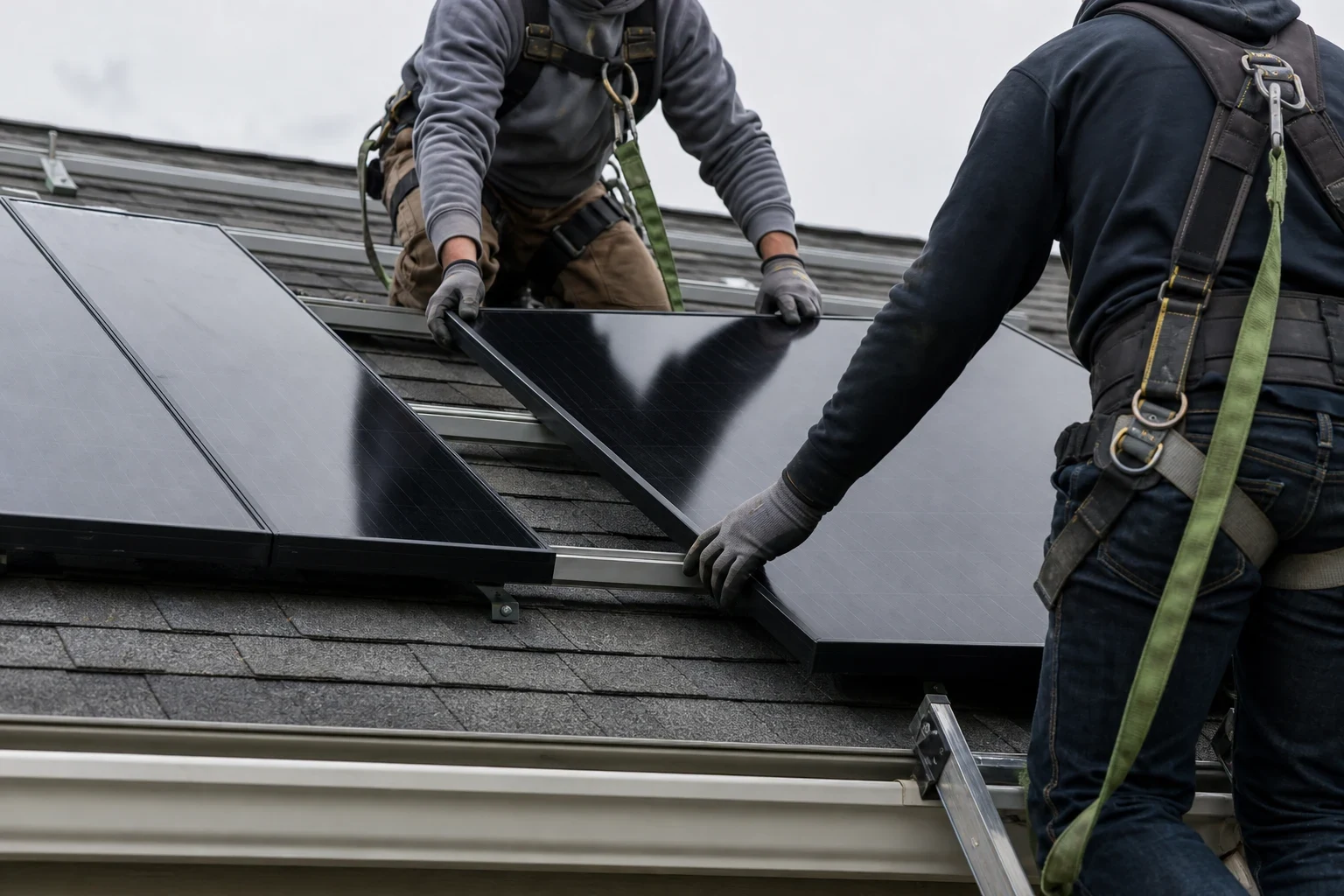
On site, we follow the rapid shutdown and disconnect sequence before touching any conductors. Then we test strings, inverters and grounding with meters and a thermal camera.
- 3
Written findings and options
We show you photos and readings and give you a line-item estimate. If a repair can wait, we tell you, and we tell you roughly how much production you give up meanwhile.
- 4
Repair and verification
After you approve the work, we replace the failed parts, restart the system and confirm production at the inverter and in your app before we leave.
Common Questions About Solar Repair
Will you repair a system installed by a different company?
Usually, yes. Equipment from the big manufacturers uses standard wiring and test procedures. During the virtual appointment we check which models you have so the parts we bring will fit.
Does an older system deserve a repair?
Most of the time. Good panels give up only a little output each year, so an array that is ten years old can keep working for decades more. At that age the inverter is the usual part to replace, and a new one brings production back to full.
Is this repair covered by my manufacturer warranty?
That depends on which part failed, how it failed and the terms on your equipment. We look up your model and serial numbers, record the defect with readings and photos, and let you know whether a claim will probably go through.
Do I need to be home during the repair?
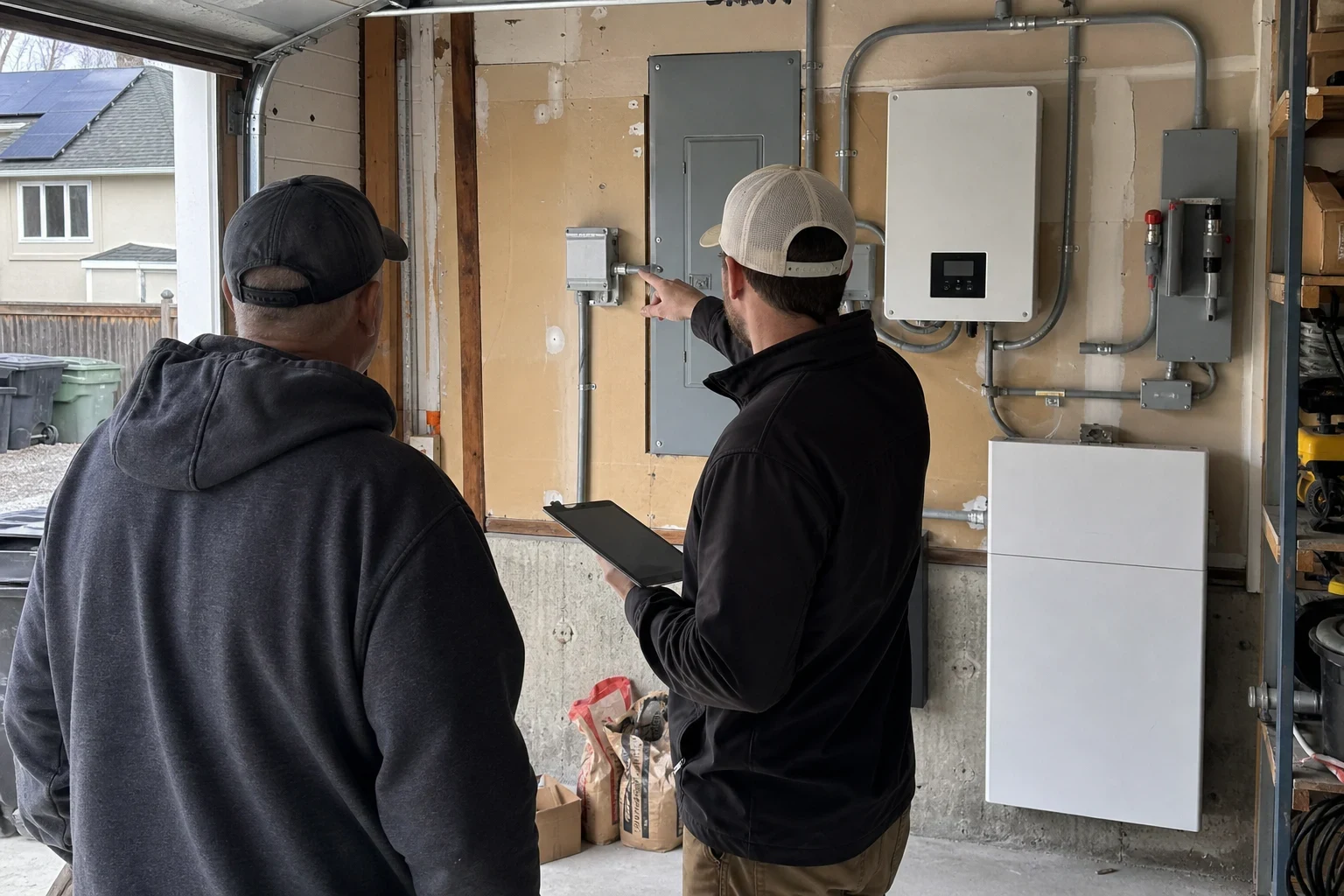
Not always, since the panels and most of the gear are outdoors. We do need to get to the inverter, the main disconnect and your electrical panel, so leaving the gate or garage unlocked helps. Once we finish, we review the photos and readings with you in person or by phone.
Is a repair a good time to add a battery?
If backup power was already on your mind, yes, and even more so when the inverter is being swapped. The Battery Storage page covers how a battery connects to a system you already have.
Find Out What Your System Is Losing
Send us your monitoring numbers and error codes on a free virtual appointment, and we will tell you what we think failed, what the fix involves and whether it can wait.